

Our Manifesto
A Paper for an Age of Renewed Conflict
World Peace Defense is a daily paper of record for global security. We exist to give every reader — from the operations centre to the kitchen table — the same clear view of what is being fought over, who is fighting, with what, and what it means.
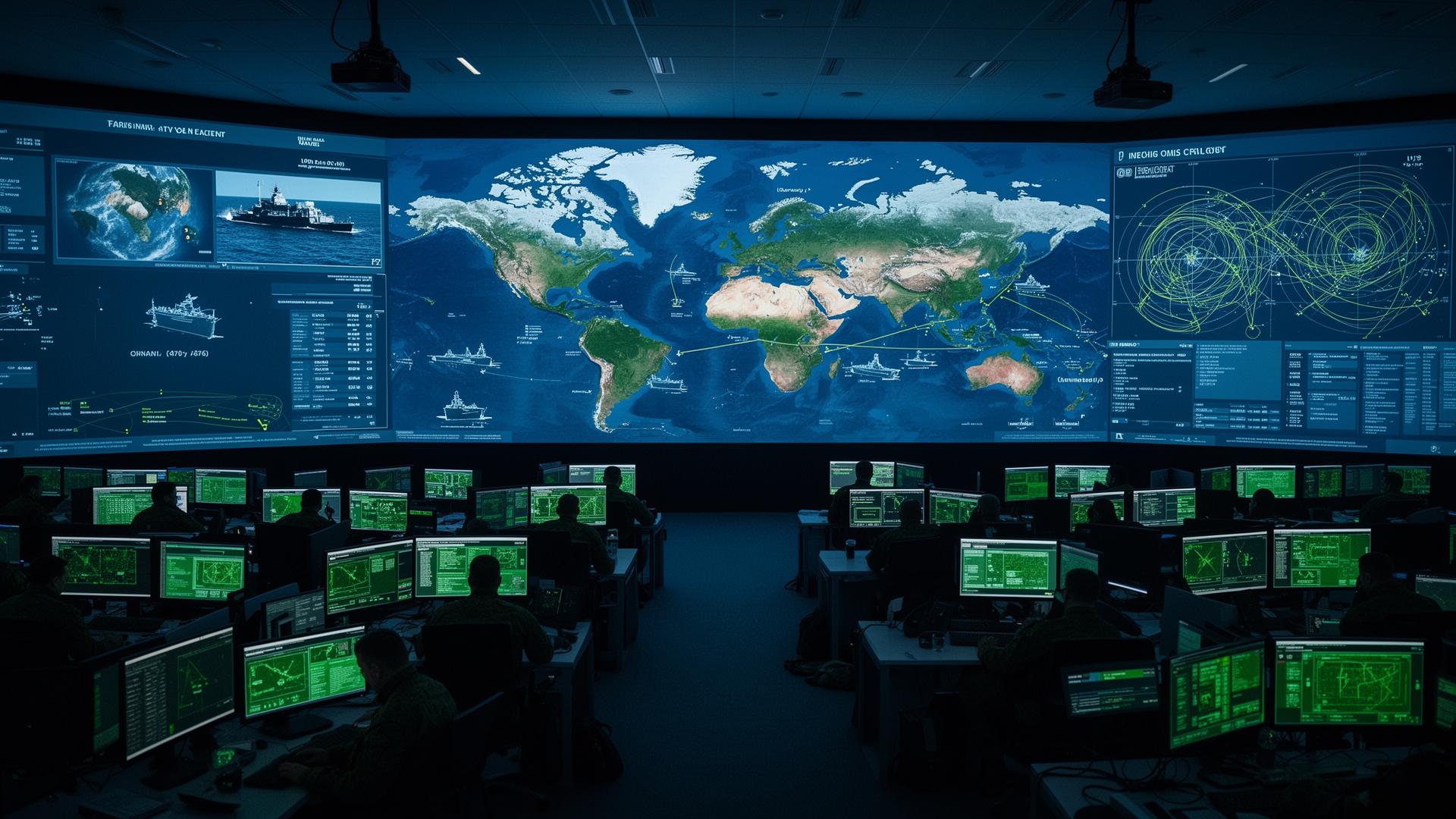
One Battlefield, Many Theatres
The post–Cold War holiday from history is over. War is back in Europe. The Middle East is a live front. The Indo-Pacific is being armed at industrial scale. The Sahel is changing hands. Cyber and space have become contested domains in their own right. The world's militaries, intelligence services and defense industries increasingly operate as a single, interconnected system — but the information that explains that system is still scattered, classified, regional, and often filtered through a press that no longer covers defense as a beat.
World Peace Defense was built to close that gap. Each day, we publish original reporting on defense policy, geopolitics, active conflicts, defense technology, air and space, naval power, intelligence, cyber and electronic warfare, and the global defense industry. We cover them as one connected story, because that is what they are. A drone strike in the Red Sea is also a story about Lockheed's order book, a Pentagon contract, an Iranian supply chain, and a NATO posture review. We write it that way.
Sharper Reporting, Less Noise
The defense press has never been louder, and yet a serious analyst or curious citizen can still struggle to get a clean read on the day. Headlines compete for outrage rather than accuracy. Vendors brief journalists like analysts. Open-source revelations outpace official confirmation. We aim to do the opposite.
Our reporters work in the tradition of Jane's, Defense News, the FT's defense desk and the best of the wire services — fact-led, source-checked, plainly written, and confident enough to say what something means without inflating it. We label opinion as opinion. We name the systems and the units. We publish the imagery and the documents we use. We correct mistakes openly. The standard we hold ourselves to is the standard a good intelligence analyst holds their own product to: be right, be clear, and be early enough to matter.
Raising Defense Literacy
Defense is the operating system of state power, and most citizens are asked to make decisions about it — votes, taxes, deployments, procurement — with very little training. We believe a serious defense paper has an obligation to teach as well as to report.
That means writing in English first and acronyms second. It means explaining what a SAM is the first time we use it, and what a basis difference between a cruise missile and a hypersonic glide vehicle really represents the next. It means treating a reader who has never been near a base with the same respect as a flag officer at a combatant command. The vocabulary of war should not be a wall around the conversation. It should be a door.
Awareness as Deterrence
When publics understand what their militaries are doing, and what their adversaries are doing, decisions get better. Bluffs get called. Procurement gets scrutinised. Wars are debated before they are fought. Awareness — broad, accurate, well-distributed awareness — is one of the most underrated stabilisers a security system has.
Our job is to widen that awareness. Not only for the professional reader who needs to know what the Joint Staff did this morning, but for the engineer joining a defense prime, the voter weighing a foreign policy, the founder building dual-use technology, and the student deciding whether national security is a career worth pursuing. The same paper, the same standards, for all of them.
What We Cover
The paper publishes in nine standing sections. Defense Policy covers Pentagon and allied strategy, budgets, and the legislation that shapes how militaries are funded. Geopolitics covers great-power competition and the alliances behind it. Conflict & Warfare reports operational facts from active theatres. Defense Technology covers hypersonics, autonomy, AI and directed energy. Air & Space covers fighters, missile defense and the militarisation of orbit. Naval & Maritime covers fleets, submarines and contested sea lanes. Intelligence covers the world's spy services. Cyber & Electronic Warfare covers state-backed cyber operations and the contest for the spectrum. Defense Industry covers the primes, the challengers, and the supply chains that arm them.
What We Are Not
We are not a contractor newsletter. We do not chase press releases, and we do not write to move a stock or sell a system. We are not a vehicle for any government, service, or political party. We are not interested in the kind of defense writing that confuses access with insight, or rhetoric with analysis.
We are equally uninterested in the inverse — the reflexive cynicism that treats all of national security as suspect. The system is imperfect, and we will say so. It is also, on its better days, the machinery by which a lot of bad outcomes are prevented. Both of those facts deserve serious reporting.
Our Standards
We aim for the standards of a serious paper of record. Original reporting. Sourced numbers. Named systems and units. Opinion clearly labelled. Conflicts of interest disclosed. Corrections published in plain sight. We assume our readers can handle complexity, and we try not to waste their time.
An Invitation
Global security is the most consequential conversation of the next decade, and it is currently being held in too many rooms at once. World Peace Defense exists to bring those rooms onto the same page — to synchronise the story, sharpen the analysis, and raise the literacy of every reader who walks in. If that is the kind of paper you want to read, we are glad you are here.
— The Editors